From Frontier to Impact: My Two Days at Microsoft’s AI Events in Houston
By Kaivan Karimi, Business Development Senior Director
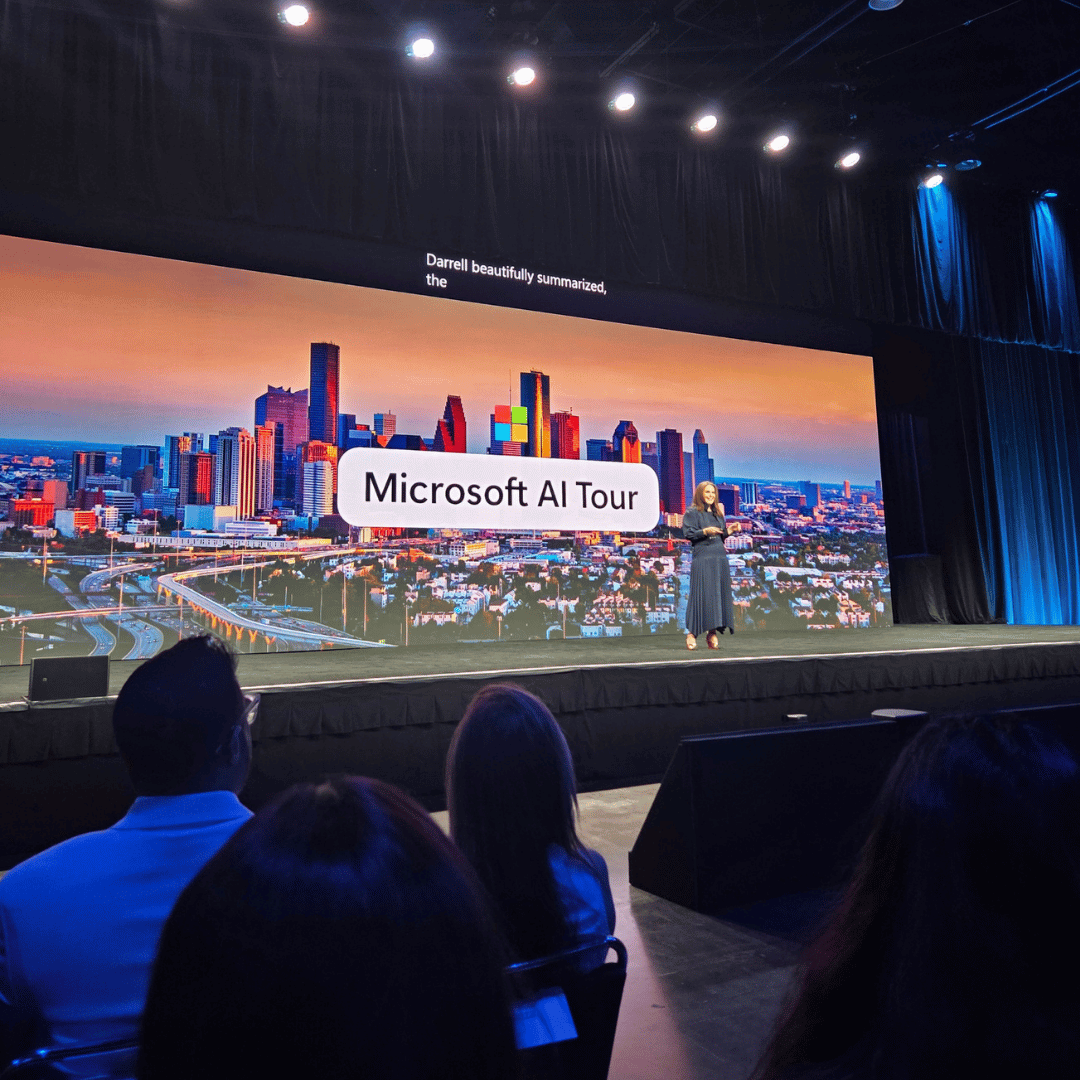
Last week I spent two days back-to-back at our partner Microsoft’s events in Houston – first the Microsoft Frontier Summit for manufacturing leaders, followed by a larger AI Tour conference. Across both events, the theme was clear: AI is reshaping how companies grow, compete, and operate, but that transformation requires a shift from AI experimentation to deploying AI at scale in real-world environments.
Day 1: Manufacturing Leaders at the Frontier (Houston Summit)
The Frontier Summit at Microsoft’s Houston office was an intimate gathering of manufacturing executives. Nicole Denil opened by welcoming us and posing a challenge: How can manufacturing companies become Frontier Firms where AI, agents, and human ambition drive real business outcomes?
Dayan Rodriguez, Microsoft’s Corporate VP for Global Manufacturing & Mobility, expanded on that vision. He discussed how AI and autonomous agents can shift manufacturing from reactive to proactive operations across engineering, production, supply chain, sales, and service.
He also observed that manufacturing leaders making the fastest progress share three habits: they focus on outcomes, ask better questions, and rethink how their teams operate. We learned that 77% of large manufacturers have AI use cases underway, and 87% are confident AI agents will expand capacity.
After the keynotes, we broke into roundtables. The highlight for me was a breakout on Frontier Factory Operations led by Bernard Ibrahim, a Microsoft Industry Advisor. Bernard shared a case study of a factory deploying AI agents on its production line. The team started with a single use case, proved ROI in a pilot, then gradually scaled it across lines as confidence grew.
The day’s discussions mirrored the reality that we see at Cerence AI: even the most advanced AI models won’t deliver value without reliable data pipelines, system integration, and user trust.
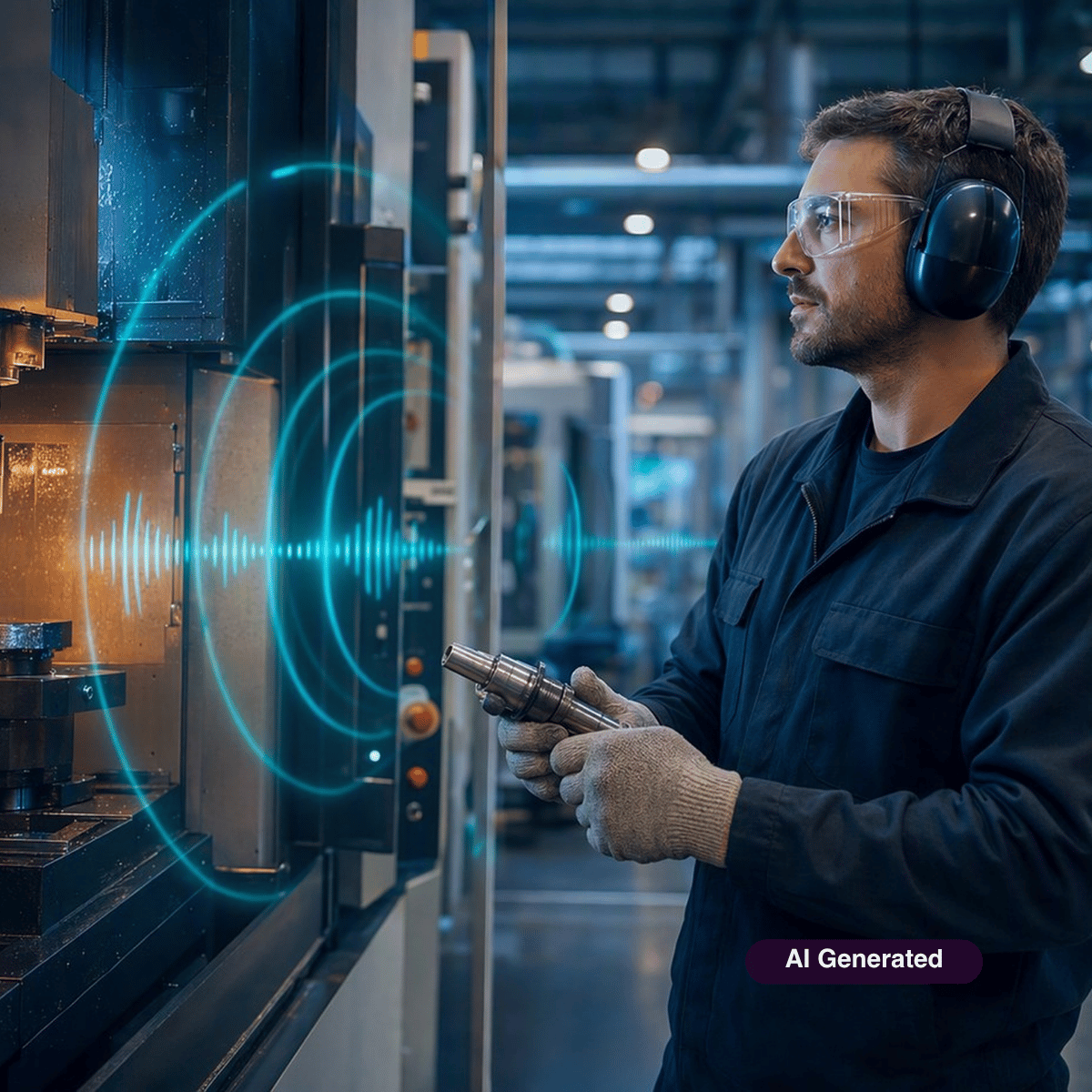
Our architecture follows Zero Trust and Defense-in-Depth principles, with data integrity at its core. We use Microsoft Purview for data governance and Entra ID to manage identities for both users and agents. This ensures frontline workers can securely and compliantly interact via voice with systems like PLM platforms or robotic arms at enterprise scale.
Day 2: AI Tour Houston – From Strategy to Execution
The Microsoft AI Tour at Houston’s George R. Brown Convention Center was a larger, high-energy conference. If Day 1 was about peer sharing, Day 2 focused on strategic guidance for building AI systems that drive measurable value, with insights from Shelley Bransten, Microsoft’s Corporate VP for Intelligent Cloud & Industry Solutions, among others.
Across the keynote and demos, a clear pattern emerged: AI platforms are evolving from discrete capabilities (content generation, vision models, copilots, etc.) into coordinated systems that can translate intent into action across workflows. Demonstrations like multi-step execution agents and real-time product defect detection reinforced how quickly these platforms are maturing from assistive tools into orchestrated, end-to-end systems.
For Cerence, this is where our focus on production-grade AI becomes critical. In settings like automotive or manufacturing, for example, systems must operate in real-time, in embedded environments, balancing latency, reliability, and deep integration across vehicle, cloud, and edge. Through our work with partners like Microsoft, we extend these platform capabilities into domain-specific applications, ensuring they perform consistently under real-world constraints, all in an enterprise secure and compliant way.
Equally important is how these systems are deployed. We combine platform innovation with hands-on integration, working closely with customers to connect fragmented data sources, align AI systems with existing architectures, and ensure they meet the performance and security requirements of global deployments. This is what ultimately enables AI to move from compelling demonstrations to scalable, production-ready experiences.
Both events gave me a powerful 360-degree view of AI transformation. Based on both the conversations in Houston and what we’re seeing firsthand at Cerence AI as we help customers move AI into production, three takeaways stood out:
From AI Pilots to Real Impact:
Moving from pilots to real-world deployment requires enterprise-grade AI systems that are proven to scale reliably. At Cerence, we see this consistently: bridging the gap between experimentation and measurable value depends on deploying AI that can operate across real environments, integrate with existing systems, and deliver consistent performance.
Trust & Strategy Built Into the Architecture:
Technology alone isn’t enough. Success depends on embedding trust into the foundation of the platform. Through our partnership with Microsoft, we’re able to bring a security-first architecture to our products that extends beyond LLM guardrails, incorporating zero trust principles along with multi-layered defenses across the full AI lifecycle.
Collaboration Drives Successful Deployment:
Scaling AI is not a standalone effort. While we collaborate closely with partners like Microsoft, we also work directly alongside our customers, often embedding engineers with their teams, to accelerate integration, reduce complexity, and share learnings.
I’m leaving Houston with a clear roadmap and renewed inspiration.
AI is entering an operational phase. The leaders in this next wave will be defined by their ability to deploy AI systems reliably, securely, and at scale in real-world environments.
For Cerence AI, that means continuing to focus on production-ready AI platforms that help customers move beyond pilots and deliver intelligent experiences with clear enterprise value.