Faster Cycles, Higher Stakes: How Automotive AI Is Changing
By Stefan Hamerich, Senior Director, Product Management
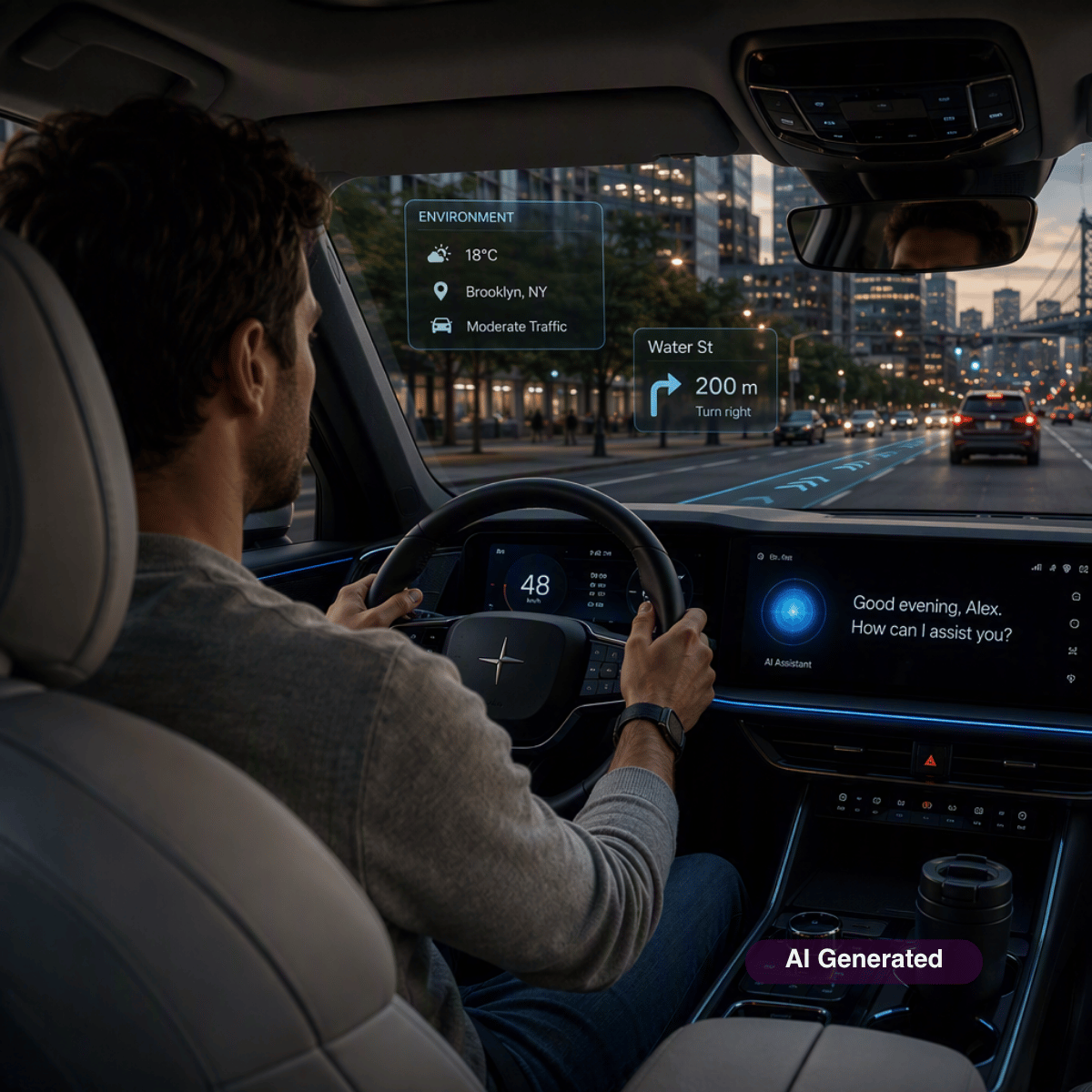
For years, in-vehicle conversational AI was defined by steady, incremental progress. Today, with advancements in large and small language models, that pace is accelerating, and the way we think about innovation is changing along with it.
True progress is no longer about pushing technological boundaries. It is turning those breakthroughs into great user experiences that drivers and passengers seek out once they’re on the road. That shift has implications not only for how in-vehicle conversational AI is deployed in production vehicles, but also for how it is architected, orchestrated and updated over time.
Innovation Is Measured by Real Usage in the Vehicle
Progress in in-vehicle AI is measured by what happens once software is deployed in production vehicles and actually hits the road – namely, whether drivers adopt newer technology generations, and whether they actively use those capabilities in everyday driving. Real validation comes from consistent end‑user engagement.
As voice systems have become more conversational, usage has increased over time, signaling that voice interaction is becoming a more natural and practical interface inside the vehicle.
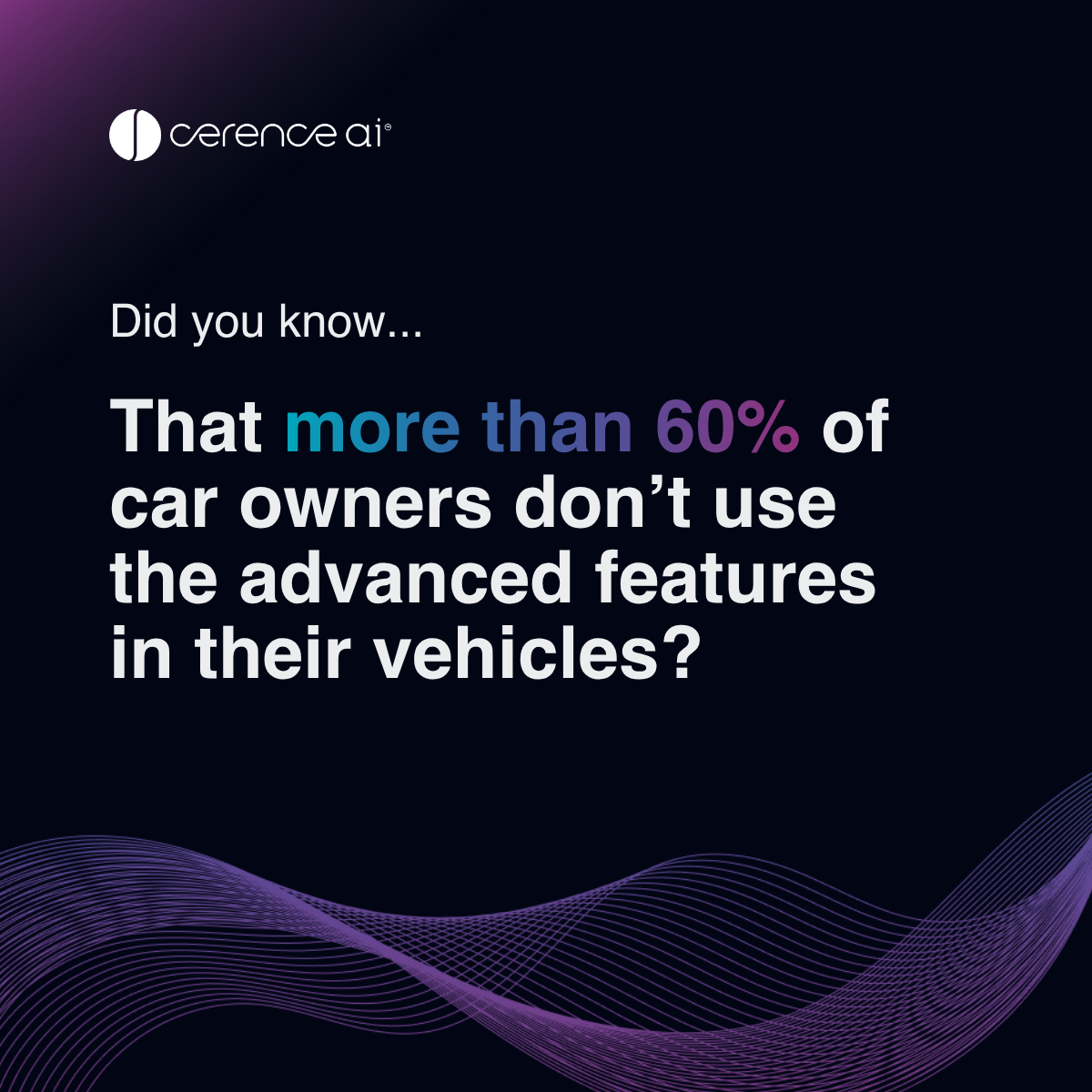
However, research shows that more than 60% of car owners don’t use the advanced features in their vehicles, so it’s critical to design in-car voice AI that not only offers utility to end users – enabling a smooth, hands-free experience – but one that helps them access the full functionality of their in-car AI.[1] For example, Cerence AI’s ownership companion agent is purpose-built to encourage end-user discovery of advanced AI features.
Faster Innovation Cycles Change How Products Are Built
Where voice systems once remained unchanged for several years, updates now arrive far more frequently. Over‑the‑air delivery enables faster iteration and improvement for OEMs, and consistent innovation for their end users, but it also introduces new pressure. Automotive software still requires extensive testing and validation, even as timelines shrink.
The result is a constant balancing act between moving fast enough to take advantage of new capabilities and maintaining the reliability expected in production vehicles.
At Cerence AI, we leverage our vast field data to test, validate and optimize key use cases.
As AI Speeds Up Product Work, Focus and Modularity Become Critical
AI tools have become an integral part of modern product work, significantly accelerating research and exploration of solution options. Tasks that once required extensive manual effort can now be completed much more efficiently.
At the same time, the rapid emergence of new models and approaches makes prioritization even more important. For OEMs, that makes architectural flexibility critical.
As models and hardware options continue to evolve, long‑term success depends on avoiding rigid, single‑vendor stacks. Cerence AI’s tech‑agnostic approach allows automakers to select the right combination of LLMs, SLMs, operating systems, and chipsets to match their needs today, while retaining the ability to adapt as requirements change.
By designing modular systems that can integrate across hardware environments and support different AI models, we help OEMs move faster without locking them into decisions that limit future innovation.
The Shift Toward End‑to‑End Voice Systems
One of the most significant changes underway in conversational AI is architectural.
Historically, “end‑to‑end” voice systems in the car were designed as linear pipelines. Audio went in, speech was recognized, an intent was selected, and a predefined action was executed. While these systems reduced integration complexity compared to fully modular stacks, they were still largely command‑and‑control interfaces, optimized for single requests rather than broader goals.
Today, end‑to‑end systems are being redefined. Instead of optimizing a single pipeline, the focus is on the system itself: how context is maintained, how decisions are made across multiple domains, and how intelligence is coordinated over time to support more natural, continuous interactions.
In this new definition of end‑to‑end systems, AI agents play a central role. Rather than responding to individual commands in isolation, agents can reason across context, intent, and history to carry out multi‑step tasks. That shift allows voice experiences to move beyond simple request‑response patterns toward more goal‑oriented interactions.
Orchestration becomes the connective tissue that makes this possible. By coordinating multiple agents, models, and data sources behind the scenes, orchestration ensures that the system behaves as a cohesive whole rather than a collection of disconnected capabilities. It also allows intelligence to be distributed across edge and cloud environments in a way that balances performance, reliability, cost-efficiency, and flexibility.
For OEMs, this approach simplifies complexity while preserving control. Instead of hard‑wiring individual features, they can evolve in‑car AI over time by introducing new agents, updating models, or adjusting behavior at the system level. For end users, the result is a voice experience that feels less like issuing commands and more like working with a proactive copilot that understands context, anticipates needs, and supports tasks naturally as the drive unfolds.
If you’re interested in learning more (and if you’re a German speaker!), check out my recent State of Innovation podcast episode with host Martin Pattera here.
[1] https://www.jdpower.com/business/press-releases/2021-us-tech-experience-index-txi-study