Why the Next Era of Industrial AI Will Be Built on Perception, Interaction, and Trust
By Kaivan Karimi, Business Development Senior Director
Manufacturing is entering a new era, with AI becoming the operating system of modern industry. Yet the people who keep factories running still work through screens, keyboards, paper instructions, and manual handoffs. That gap is what the next frontier of industrial modernization will solve for.
It is also a key topic heading into IMTS in Chicago, where nearly 100,000 industry pros from across the globe will gather to discuss industrial AI.
At IMTS, we’ll hear from manufacturers integrating data, processes, people, and machines into systems that sense, decide, and act. But translating intelligence into impact demands an interaction layer built for the physical world: one that holds up under noise, motion, and unreliable or non-existent connectivity (such as air-gapped facilities).
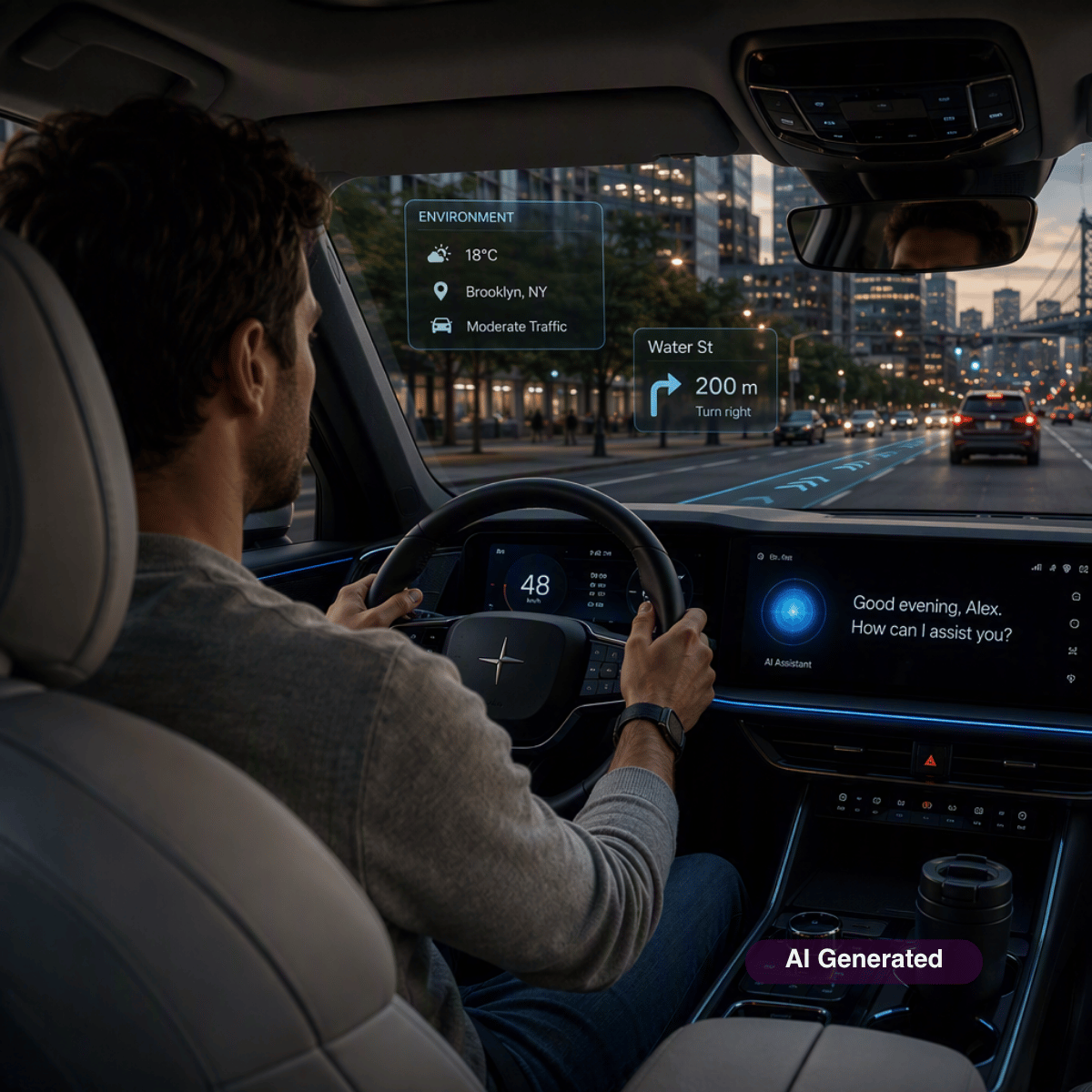
For more than 25 years, Cerence AI has solved some of the world's most demanding human-machine interaction challenges, with our technology shipped in over 525 million vehicles globally. We are now applying that expertise to manufacturing and industrial automation, delivering what industrial AI increasingly requires: a human interface built for the realities of the physical world.
Four Trends Are Reshaping the Factory Floor
1) AI Acceleration
Manufacturers are moving from dashboards toward AI agents that reason, plan, and act across complex workflows. Cerence AI extends that intelligence to the point of work and to the edge, where a technician or supervisor can ask, confirm, log, and execute by voice and multimodal input, regardless of connectivity.
2) Frontline Work Transformation
Experienced workers are retiring, and their decades of experience need to get captured in an intuitive way before it’s too late. At the same time, new crews who are more mobile and multilingual need to get trained efficiently, and many jobs are hands-busy, eyes-up, PPE-constrained, and noise-exposed. Cerence AI brings noise-robust, multilingual interaction to those workers on shared devices, so attention stays on the task rather than the screen.
3) Supply-Chain Resilience
Resilience is decided at the point of work: what was observed, what changed, what failed, and what was fixed. Cerence turns those events into preserved, structured signals that flow into MES, CMMS, ERP, PLM, WMS, and digital twins.
4) Physical AI
Robots, cobots, and autonomous systems are arriving on the floor. As AI moves from recommending to acting, it’s critical that people stay in command. Cerence helps people understand, command, and confirm the actions of physical AI, with perception playing an increasingly central role alongside direct instruction.
As these four trends continue to converge, the leaders of the next decade will bring AI, data, people, and domain expertise together to rethink how they design, build, operate, and serve.
Machines That Listen, Not Just Machines That Obey
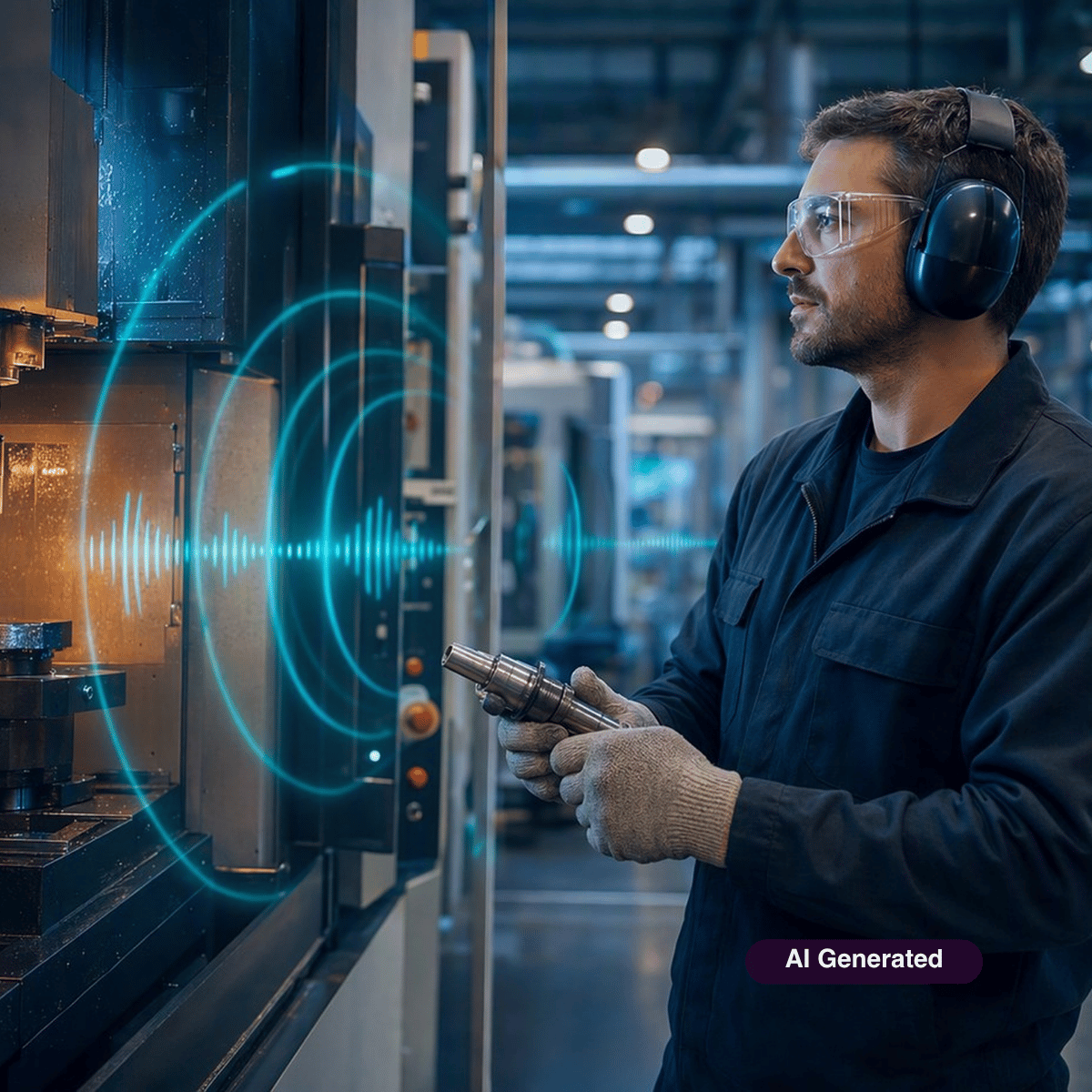
Recognizing a spoken instruction is only half the equation. The bigger challenge is recognizing that something in the environment has changed and understanding what that change means. AI that can perceive those signals can identify emerging issues before they become visible through traditional monitoring systems.
Voice AI was the first step. It gave machines the ability to understand us. Audio AI takes the next step: giving machines the ability to understand their surroundings.
The same foundational technologies that distinguish speech from noise can also distinguish normal operation from emerging problems. By listening continuously to the physical world, AI can identify patterns, detect anomalies, and recognize meaningful change long before it becomes obvious to a human operator or appears in a report. That ability to perceive is what transforms AI from a responsive tool into an intelligent participant in the physical world.
Beyond Voice: Perception at the Point of Work (The Edge)
The future of physical AI is not built on voice alone. It is built on multimodal perception: combining audio, visual, tactile, and spatial signals into a unified understanding of the physical world. The result is AI with a richer, more accurate understanding of its environment.

Audio, vision, touch, and spatial signals reconciled into one operational picture, in real time.
For example, vision interprets labels, indicators, and gauge readings. Audio detects cues that may fall outside a camera’s field of view. Force and pressure data verify the outcome of an action at the tool. By combining these inputs, an industrial cell can identify anomalies and adapt in real time without requiring manual intervention, since each modality compensates for the limitations of the others.
The number of ways a machine can perceive its environment continues to grow. Beyond vision and audio, emerging capabilities such as tactile sensing, spatial audio, and silent-speech interfaces provide additional context about what is happening, where it is happening, and how humans are interacting with the system. Together, these modalities create a richer understanding of the physical world, enabling AI to move beyond isolated observations toward a continuously updated view of operational reality.
The same trend is driving increased investment in industrial digital twins. Through our collaboration with NVIDIA, Cerence AI will help make complex operational environments more accessible through natural, conversational interaction, allowing workers to engage with digital representations of factories, production systems, and workflows more intuitively. As industrial AI evolves, interaction will increasingly become the bridge between physical operations and intelligent digital systems.
Partnering with Microsoft for Cloud, Security, and Trust
None of this scales without trust. AI must be grounded in enterprise context, governed securely, observable across the stack, and integrated into the tools people already use. Cerence AI is fully aligned to the Microsoft stack — Azure, Security, Foundry, and Copilot — with deep integration into Microsoft security practices and enterprise-grade compliance expectations.
That matters because a plant is not one environment but several stitched together: IT and OT, edge devices, workforce identity, and safety-critical operations. Our approach is secure by design and default and secure in operations, with Microsoft-aligned security tooling, identity and policy controls, and enterprise-grade data protection.
Trusted Identity at the Point of Work
In safety-critical industrial environments, capturing the command itself is only part of the challenge. Organizations must also verify who issued the instruction, confirm that person is authorized to perform that action, and ensure those permissions remain valid for the required period of time.
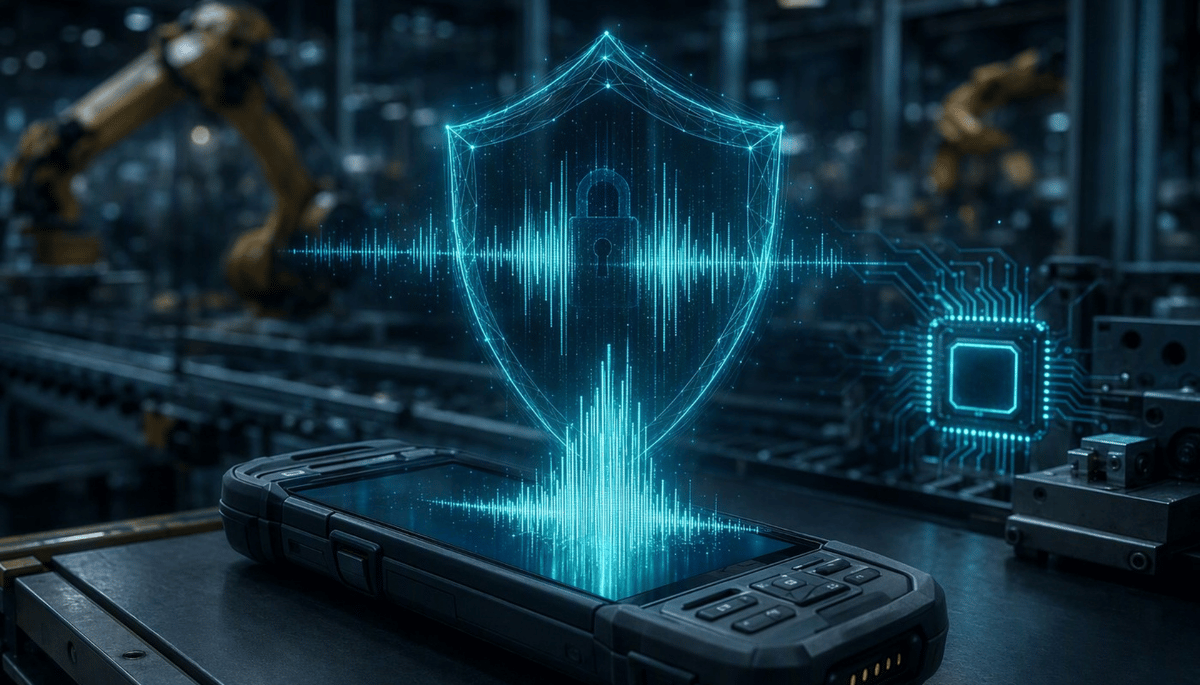
Not just what was requested, but by whom, with what authority, and for how long.
Voice biometrics travel the same acoustic path as the request, making every utterance an identity signal as well as an instruction, entirely on the device. Combined with Zero Trust and tamper-evident logging, that gives a plant a continuous local identity layer, with each action written to an auditable record supporting OSHA, ISO, and EU AI Act obligations.
Why It Has to Work When the Network Does Not
A machine on a line cannot pause while the cloud decides, and plenty of plants restrict outbound connectivity on principle. Our architecture runs the entire chain locally: acoustic front-end, wake word, recognition, understanding, biometrics, and a small language model handling the reasoning. Where connectivity exists, a hybrid mode extends it; where it does not, operations continue uninterrupted.
Let’s Chat at IMTS
The opportunity in Chicago is to move toward AI as an operating model. The next leap is bringing intelligence directly to the point of work: helping operators access information instantly, enabling machines to communicate issues before they become downtime, and allowing decisions to be executed within defined policies.
The most valuable industrial AI will not live in dashboards or reports. It will live on the factory floor, where workers, machines, and intelligent systems work together to improve productivity, quality, safety, and uptime. That is where intelligence becomes impact.
If you are building industrial AI, robotics, or connected factory systems and this is the layer you are missing, my colleagues and I would welcome the conversation. Reach out at kaivan.karimi@cerence.com, or find the Cerence AI team at IMTS 2026 in Chicago, September 14 to 19.